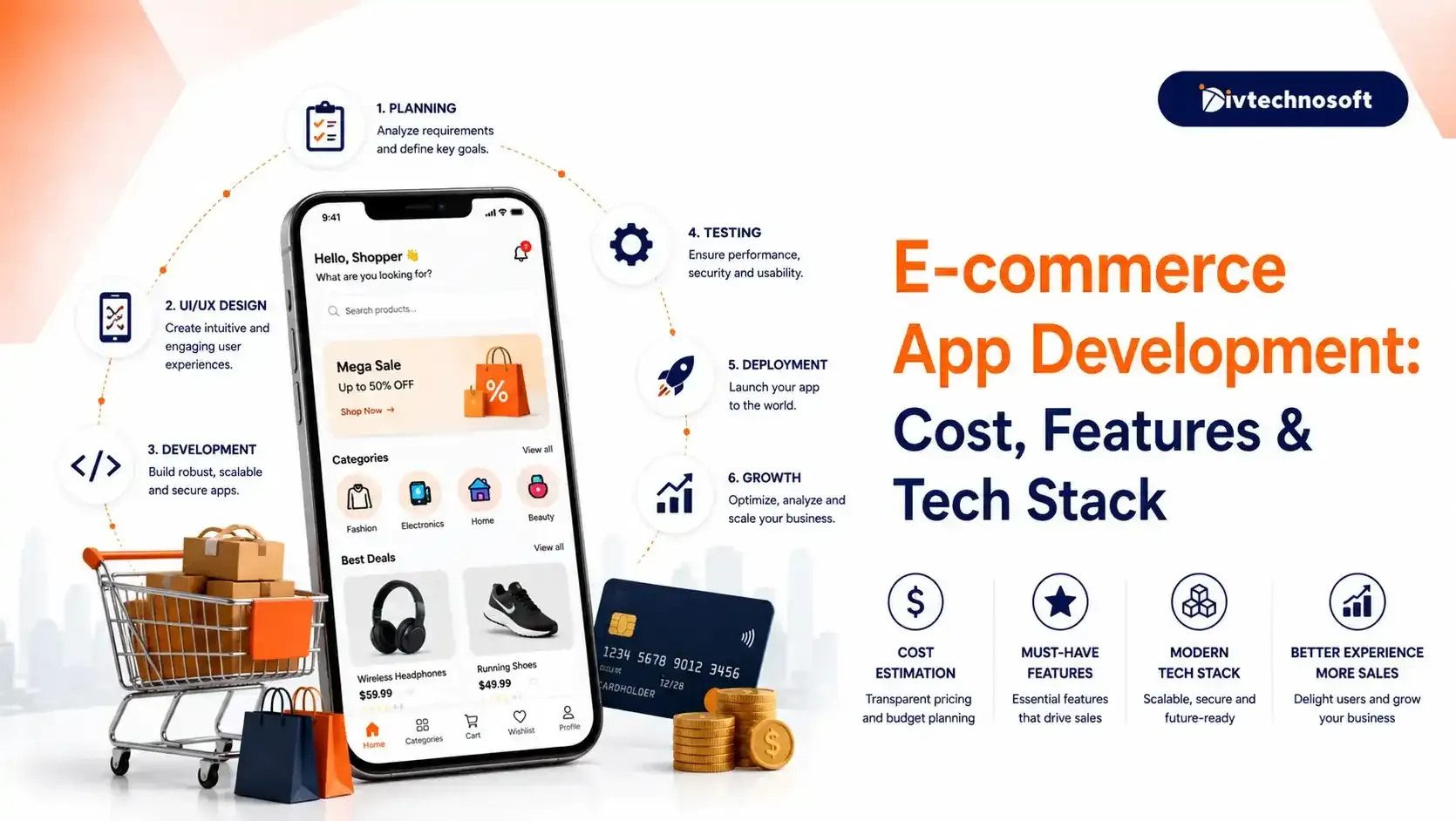
E-commerce App Development: Cost, Features & Tech Stack
Learn about e-commerce app development costs, key features, and tech stacks. Discover how to build a scalable custom mobile app for your online store.

Mobile shopping is growing rapidly. Today, most consumers use smartphones to browse products, compare prices, and buy online. Relying only on a traditional website is no longer enough to stay competitive.
This makes ecommerce mobile app development essential for retail growth. Dedicated mobile apps deliver faster load times, personalized shopping, push notifications, and seamless checkouts that increase customer retention.
This guide breaks down ecommerce app development cost factors, must-have features, recommended tech stacks, and key steps to build a successful shopping app.

Why Invest in Custom E-commerce App Development?
Investing in custom ecommerce app development gives your business a major advantage over competitors who rely only on mobile websites. Here is why a dedicated app is worth the investment:
A dedicated mobile app can outperform a mobile website by offering faster performance, smoother navigation, one-click checkout, personalized push notifications, and loyalty features. With your brand always accessible from the home screen, apps make it easier to re-engage customers, encourage repeat purchases, and build stronger brand loyalty.
Must-Have Features for an E-commerce App
To build a high-performing app, you need features that create a smooth shopping journey for buyers while providing powerful control tools for store managers.
User-Facing Features
Shoppers expect quick registration through email or social accounts and smart search filters to find products fast. Secure checkout options like digital wallets and credit cards prevent abandoned carts, while real-time order tracking and push notifications keep buyers updated and engaged.
Admin-Facing Features
Store owners need reliable backend tools to manage daily operations efficiently. Automated inventory tracking alerts staff when stock is low, while centralized dashboards handle order processing and shipping. Built-in analytics also help managers track revenue trends and run targeted discount campaigns.
Advanced Features
Modern technologies help your shopping app stand out from basic online stores. AI tools suggest personalized products based on browsing history, augmented reality allows users to preview items in their homes, and voice search enables convenient hands-free shopping.
E-commerce App Development Cost Breakdown
The total cost of building a mobile shopping application depends on your business goals, target platforms, and feature complexity. Understanding these factors helps you plan your budget effectively.
Key Cost Factors
Simple apps with basic product displays cost significantly less than advanced apps with artificial intelligence and real-time tracking.
Standard interface templates are budget-friendly, while custom branding, tailored animations, and complex user flows increase costs.
Building a single native app for iOS or Android requires less upfront investment, but cross-platform frameworks allow you to target both operating systems using a single codebase.
Connecting external APIs for payment processing, inventory sync, and shipping calculators adds complexity and development hours.
Cost Breakdown by App Complexity
Focuses on essential shopping functions including simple user profiles, a basic product catalog, standard search, and a single payment gateway.
Features a custom user interface, advanced search filters, multiple payment methods, push notifications, and detailed user reviews.
Includes features such as AI product recommendations, a custom backend, multi-vendor support, global multi-currency payments, and multi-language support.
Ongoing Post-Launch Costs
Building the app is only the first step. You must budget for ongoing maintenance to keep your store functional and secure:
Managing backend infrastructure and handling sudden traffic spikes during major sales.
Updating the app to stay compatible with annual iOS and Android operating system updates.
Performing regular security audits, protecting user payment data, and resolving unexpected software bugs.
Build Smart: Start with an MVP
Starting with a full enterprise app can be risky and expensive for a new online store. A smart strategy is to build a Minimum Viable Product (MVP) first. An MVP includes only the core shopping features needed to launch quickly, gather real customer feedback, and test the market with minimal risk.
MVP development can help you launch a lean, scalable shopping app to validate your business idea while keeping initial development costs under control.
Recommended Tech Stack for E-commerce Mobile Apps
Choosing the right technology stack ensures your shopping app runs fast, handles heavy user traffic, and stays secure. Here are the core technologies recommended for modern mobile store builds:
Frontend (Mobile App): Cross-platform frameworks like Flutter or React Native allow developers to build iOS and Android apps simultaneously from a single codebase, saving time and costs. For complex, performance-heavy applications, native development using Swift (iOS) and Kotlin (Android) delivers maximum speed and device control.
Backend and API: Scalable server frameworks like Node.js, Python, or Go handle concurrent user requests, process product catalogs, and connect your mobile frontend to backend databases smoothly.
Database and Cloud: Reliable databases like PostgreSQL and MongoDB store product inventories and user accounts securely. Cloud infrastructure platforms like Amazon Web Services (AWS) or Google Cloud provide automatic scaling to handle sudden traffic surges during flash sales.
Payments and Integrations: Industry-standard payment gateways like Stripe, PayPal, and Razorpay handle online transactions with strict security encryption. Connecting CRM and ERP systems keeps inventory, customer support, and order processing synced in real time.
Divtechnosoft applied this tech stack to build a Multilingual Grocery Delivery Platform. Combining Ionic, Firebase, and payment gateways like Apple Pay and BenefitPay enabled multi-region scaling, fast load times, and effortless checkouts.
Key Development Challenges
Building a successful shopping app requires solving technical obstacles around security, server traffic, and customer engagement. Here is how to tackle them:
E-commerce apps handle sensitive customer details and financial transactions. Maintain trust by applying PCI-DSS compliance, SSL encryption, secure payment gateways, and two-factor authentication.
High-traffic sales and holiday events can slow down or crash your platform. Use auto-scaling cloud servers like AWS or Google Cloud to handle traffic spikes smoothly without performance drops.
Keeping shoppers active requires continuous value. Boost retention through quick onboarding, personalized rewards, relevant push notifications, and frictionless checkout flows.
FAQs
How long does it take to build an e-commerce app?
Building a basic MVP app usually takes 2 to 3 months. A medium-complexity app with custom designs and multiple payment options takes about 3 to 5 months. Complex enterprise apps with custom backends and AI features can take 6 months or longer.
Should I choose native or cross-platform app development?
Cross-platform development using Flutter or React Native is ideal if you want to launch on both iOS and Android quickly while saving on costs. Native development using Swift or Kotlin is better if your app requires heavy performance, complex hardware access, or specialized features.
How do I choose the right e-commerce app development company?
Look for a partner with proven experience in mobile retail apps. Review their past case studies, check client testimonials, evaluate their security standards, and ensure they provide clear communication and ongoing post-launch support.
How to make an online shopping app like Amazon?
To build an online shopping app like Amazon, start by defining your core value proposition and key marketplace features, such as multi-vendor management, secure payment gateways, advanced search, and real-time order tracking. Launch a Minimum Viable Product (MVP) to validate your business model, then continuously scale infrastructure and introduce AI-driven personalized recommendations as your seller and customer bases expand.
Build a Mobile App for Your Online Store Today
Launching a custom mobile app is one of the most effective ways to scale your online retail business. A dedicated shopping app speeds up checkouts, boosts brand loyalty, and delivers higher conversion rates compared to standard mobile websites.
Divtechnosoft helps businesses design, build, and launch high-performing e-commerce applications. From simple MVPs to advanced cross-platform apps, our team delivers secure, scalable mobile solutions tailored to your growth goals.