Headless vs. Headful CMS - Which One is Right for You?
Compare headless vs headful CMS to understand key differences, benefits, and which option best fits your business needs.

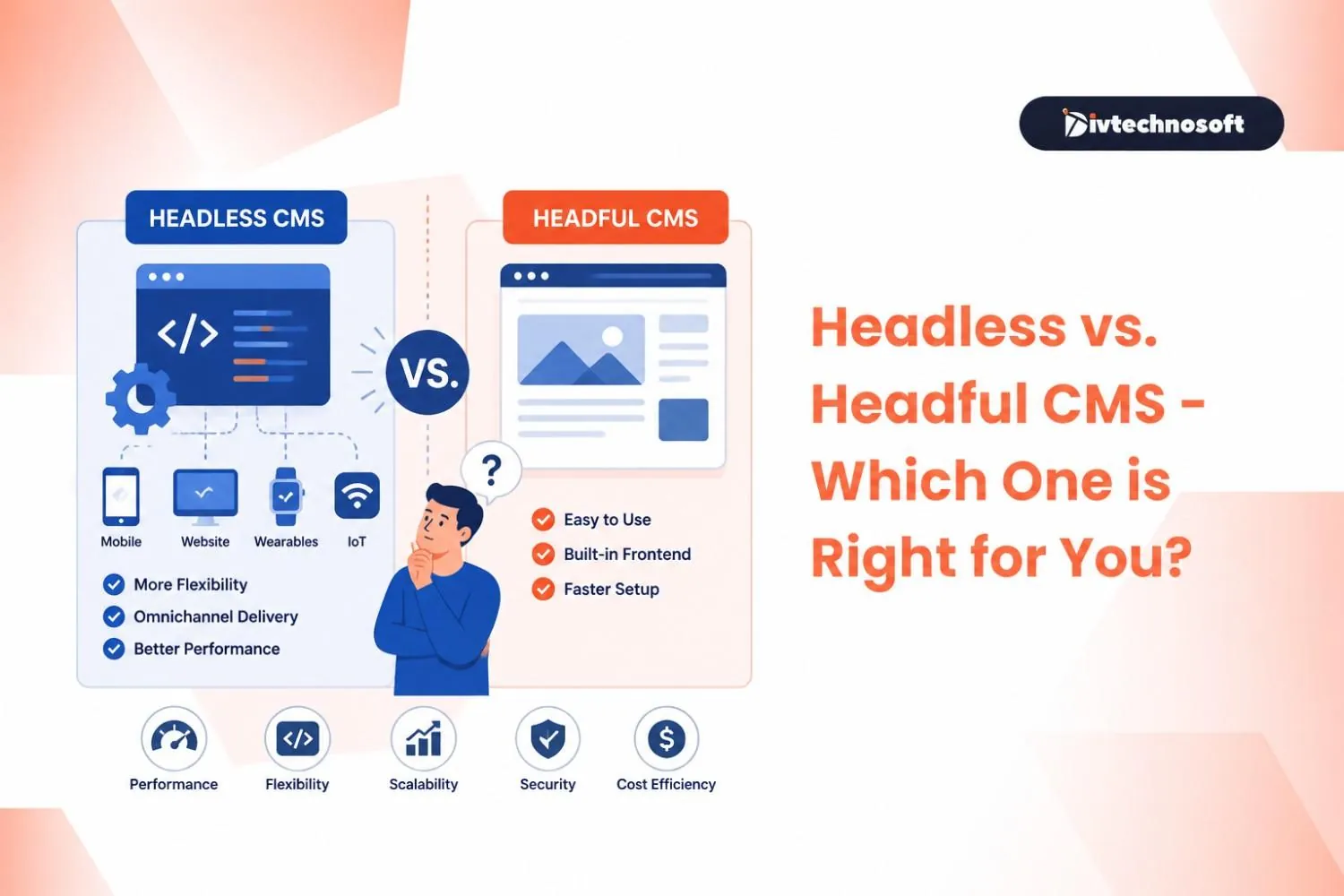
Choosing the right way to manage your digital content is a significant decision for any business owner or marketer. As the internet changes, the tools we use to build websites also change.
You might have heard the terms Headless CMS and Headful CMS recently. While they sound technical, the concepts behind them are quite simple. This guide will help you understand which one fits your specific goals without using complicated jargon.
The Evolution of Content Management
In the early days of the web, every page had to be built by hand using code. This was slow and difficult for people who were not developers. To solve this, developers created Content Management Systems or CMS. These systems allowed anyone to log in and write a blog post or change a price without touching the code.
For a long time, there was only one way to do this. The system that held your content also controlled how your website looked. We call this a traditional or Headful CMS. However, as we started using smartphones, tablets, and smart devices, we needed a more flexible way to send our content to different places. This led to the creation of the Headless CMS.
What is a Headful CMS
A headful or traditional CMS is a complete package. Imagine buying a car where the engine and the body are built together as one unit. You cannot easily take the engine out and put it into a boat. In a headful CMS, the back end, where you save your data, is tightly joined to the front end, which is the part your customers see.
How a Headful CMS Works
When you log into a system like WordPress, you write your text in an editor. The system then takes that text and automatically puts it into a theme or a template. The design and the content are lived in the same place. This makes it very easy to see exactly what your page will look like before you hit the publish button.
Benefits of Using a Headful CMS
Most traditional systems are built for people who are not technical. They often feature drag-and-drop tools.
You can choose a pre-made design and have a website running in a few hours.
Because the design and the management system come together, you usually spend less on development at the start.
If you run into a problem, there are millions of other people using the same system who can help you.
Drawbacks of a Headful CMS
You are often stuck within the rules of your chosen theme.
Because these systems carry a lot of extra code to make them easy to use, they can sometimes be slower than custom-built sites.
Since these systems are very popular, they are often targets for hackers. You have to update your software and plugins constantly to stay safe.
What is a Headless CMS
A Headless CMS is a newer approach where the head or the design is separated from the body or the content. It is a content-only system. It does not provide a website or a theme. Instead, it gives you a place to store your words and images and then provides a way for developers to pull that information into any design they choose.
How a Headless CMS Works
Think of a headless system as a digital warehouse. You store your articles and photos there. When you want to show them to someone, you use an API that acts like a delivery truck. That truck can carry your content to a website, a mobile app, or even a screen in a retail store. The design is built separately, usually by a developer using modern coding tools.
Benefits of Using a Headless CMS
Your designers can build any experience they want without being limited by a CMS theme.
You write your content once and send it to your website, your iPhone app, and your Android app all at the same time.
Because the front end is built specifically for speed, these websites often load much faster than traditional ones.
Since the content storage is hidden from the public website, it is much harder for people to break into your system.
Drawbacks of a Headless CMS
You cannot build a headless site on your own if you do not know how to code. You will need a technical team.
Sometimes it is harder for writers to see exactly how their text will look on the site because the design is handled elsewhere.
Building a custom front end and connecting it to a headless system usually takes more time and money upfront.
Direct Comparison of Features
To help you decide, here is a simple table that compares the two approaches across different categories.
Feature | Headful Traditional CMS | Headless CMS |
|---|---|---|
Ease of Use | Very high for beginners | Moderate for content creators |
Development Needs | Low to moderate | High |
Website Speed | Can be slow due to bloat | Usually very fast |
Flexibility | Limited by templates | Unlimited |
Security | Requires frequent updates | Highly secure by nature |
Cost | Lower at the start | Higher at the start |
Which One is Right for You
The answer depends on the stage of your business and your long-term goals.
Choose a Headful CMS if:
You are a small business or an individual starting out.
You need to get your website live as fast as possible.
You have a small budget for development.
You want to manage the design yourself without hiring an expert.
You only plan to show your content on a single website.
Choose a Headless CMS if:
You are a growing brand that needs a unique and fast user experience.
You have a dedicated team of developers or a partnership with an agency.
You need to display your content on multiple platforms, such as apps and websites.
Your website performance is critical for your sales and SEO.
You want to build a system that will still work well five years from now.
Future Proofing Your Content
The digital world moves fast. A headful system might feel easier today, but a headless system offers a way to keep your content separate from the design. This means that when you want to change your look in the future, you do not have to start from scratch.
You simply build a new design and connect it to your existing warehouse. This flexibility is why many large companies are moving toward a headless strategy.
Conclusion
Both headful and headless CMS have their place in today’s market. The right choice depends on what you need right now and where you want to go in the future.
If you want simplicity and quick setup, a traditional CMS is a strong option
If you need high performance, scalability, and multi-device support, a headless CMS is a better fit
Before deciding, think about your long-term goals. Your CMS should support your growth, not limit it
If these choices feel confusing, working with the right partner can make things much easier
Divtechnosoft helps businesses choose and build the right content systems based on their needs. Their team focuses on creating solutions that are practical, scalable, and aligned with your business goals
Need a simple website that works smoothly
Want a powerful headless setup for a growing brand
They can guide you through both. With the right support, you can focus on creating great content while the technical side is handled efficiently