7 Ways Digital Technology is Used in Sports
Explore ways digital technology is used in sports to improve athlete performance, fan engagement, training, analytics, and overall sports management.

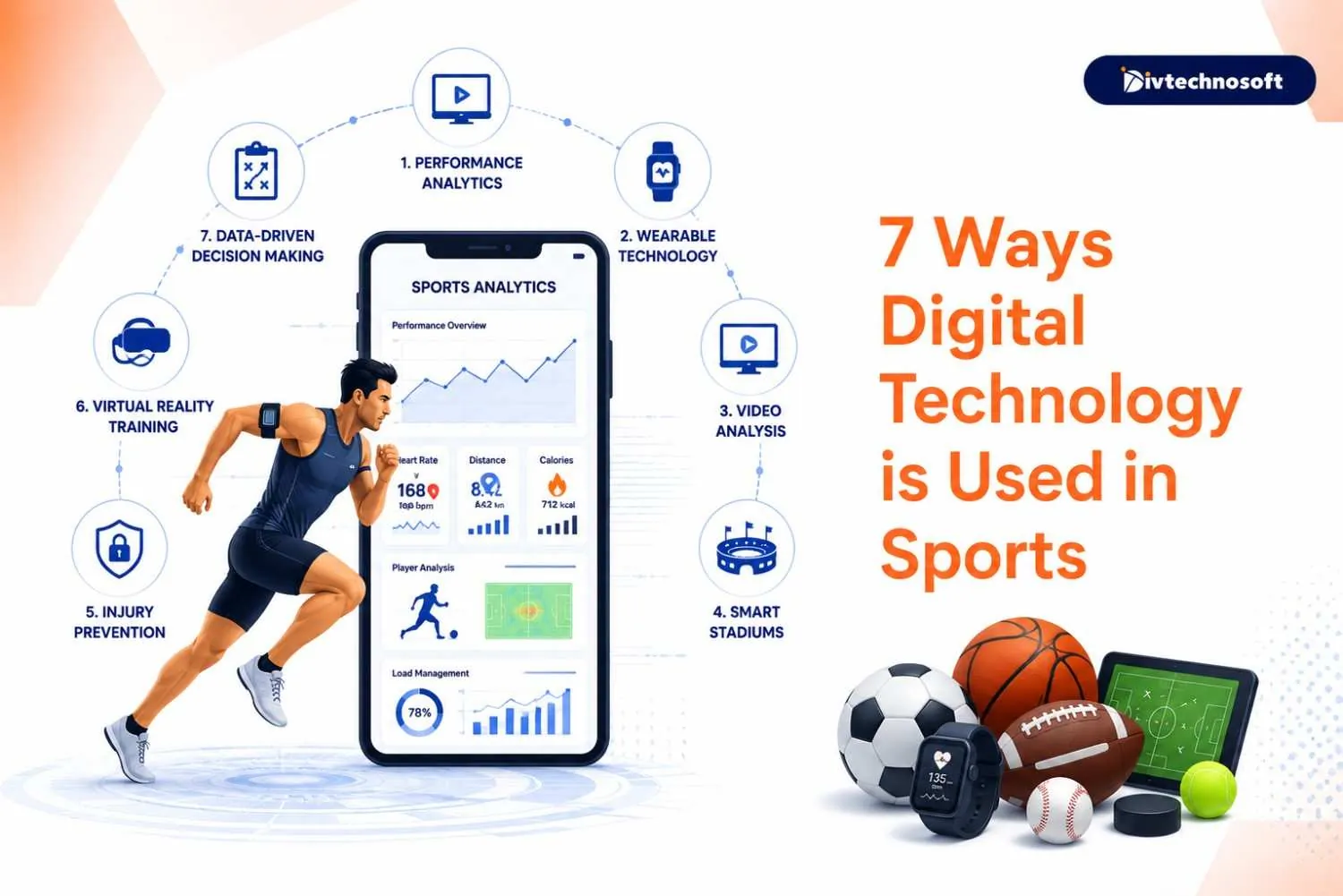
Digital technology has transformed every part of the sports industry, from athlete training and performance tracking to fan engagement and facility management. Nowadays, sports organizations rely on advanced tools and software to improve efficiency, enhance experiences, and stay competitive.
Whether it is wearable fitness tech, analytics platforms, or gym management systems, technology continues to reshape how sports are played, managed, and experienced.
Top Uses of Digital Technology in Sports
Technology in sports is broad, but we can narrow it down to the most impactful use cases seen today.
1. Wearable Tech and Athlete Biometrics
Athletes now wear sensors that track everything from sweat composition to sleep quality. This data allows coaches to prevent injuries before they happen. If a player’s heart rate variability shows signs of fatigue, they are benched for recovery. This level of precision ensures that players stay at their peak for longer periods.
2. High-Speed Video Analysis and VAR
Gone are the days of simple replays. In 2026, computer vision and AI will analyze every limb movement of a pitcher or a sprinter. Systems like VAR (Video Assistant Referee) have become faster and more accurate, using sensor-filled balls and limb-tracking cameras to make split-second offside calls.
3. Smart Stadiums and Fan Engagement
Stadiums are now massive IoT hubs. Fans use apps to order food to their seats, view real-time player stats via augmented reality, and even find the shortest line for the restroom. This digital layer turns a passive viewing experience into an interactive event.
4. Advanced Training via VR and AR
Quarterbacks and Formula 1 drivers use Virtual Reality to run thousands of simulations without putting physical strain on their bodies. They can practice against a specific defense or on a specific track repeatedly until the movements become muscle memory.
5. Automated Facility Operations
For sports complexes and fitness centers, digital technology handles the heavy lifting of administration. Using high-quality membership management software for gym owners and sports directors means they no longer spend hours on manual scheduling. These systems automate:
Member check-ins via facial recognition or mobile QR codes.
Automated billing and renewal reminders.
6. Data-Driven Scouting and Recruitment
Recruitment is no longer just about a scout’s gut feeling. Teams use massive databases that track every play made by an athlete across the globe. Small-market teams use this data to find undervalued players who fit their specific system, much like the early days of Moneyball, but on a global, digital scale.
7. Digital Content and the Metaverse
Sports consumption has moved beyond the TV. Fans now watch games in virtual environments where they can hang out with friends’ avatars. Highlights are generated by AI in seconds, tailored to the specific interests of individual fans, and distributed across social platforms instantly.
Technology Impact Matrix
Technology Area | Main Use Case | Primary Benefit |
|---|---|---|
Wearables | Health Tracking | Injury Prevention |
AI Analysis | Strategy & Tactics | Competitive Edge |
Cloud Software | Admin & Billing | Operational Efficiency |
VR / AR | Simulation | Safe Training |
Mobile Apps | Fan Interaction | Increased Revenue |
Why Modern Management Software is a Sports Necessity
While high-end pro teams have massive budgets, local sports facilities often struggle with the complexity of modern business. This is why having the right infrastructure is vital. If a local basketball club or fitness center uses the best software for gym management, they can free up their staff to actually coach rather than manage spreadsheets.
The Role of Membership Management
A specialized membership management software for gym and sports clubs handles the friction points of the business.
Reduced Churn: Automated systems can identify when a member stops coming and send a push notification to win them back.
Security: Digital access logs ensure that only paying members are using the facilities.
Revenue Protection: In 2026, card-on-file technology automatically updates expired credit cards, preventing lost income.
Implementation Challenges
Despite the benefits, moving to a digital-first model isn't always easy. Facilities often face:
Data Silos: When the booking system doesn't talk to the billing system.
Learning Curves: Staff might find complex new software intimidating if it isn't designed with a human-centric UI.
Integration Costs: The initial price of hardware (sensors, tablets, kiosks) can be high for small centers.
The Future: AI Coaches and Hyper-Personalization
Digital technology is transforming the sports industry by improving athlete performance, enhancing fan experiences, and simplifying daily operations for fitness businesses. From AI-driven insights to advanced management systems, technology is helping sports organizations operate more efficiently and stay competitive.
Divtechnosoft supports sports and fitness businesses with customized digital solutions built for modern industry needs. Their scalable and user-friendly software helps streamline operations, automate management tasks, and create a seamless experience for both staff and members.