Software Discovery Phase: What It Is & Why It Matters
Learn what the software discovery phase is, why it matters for project success, and key steps involved. Avoid costly development mistakes.

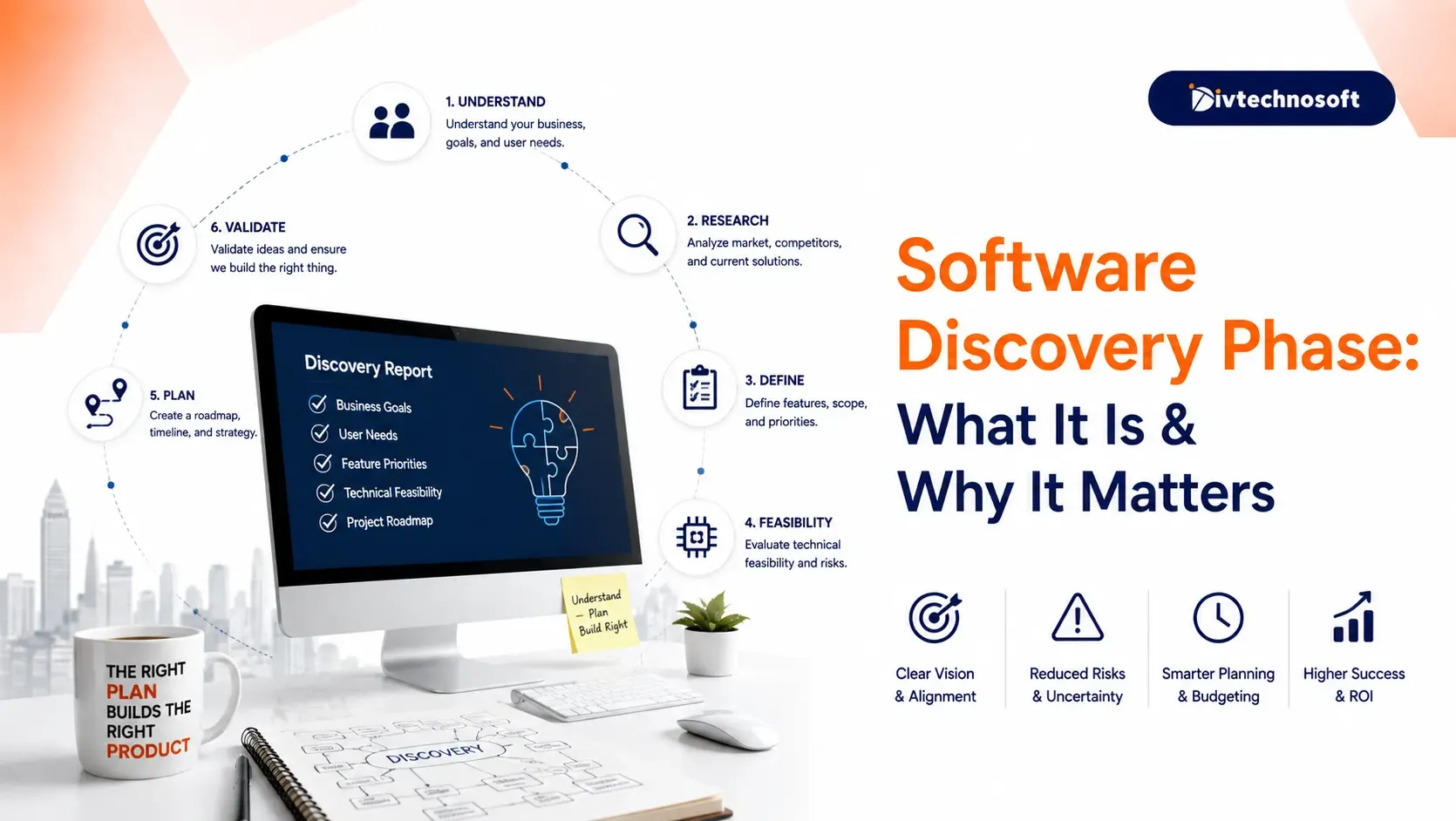
Many software projects fail or run over budget long before the first line of code is written. Building software without proper planning is like building a house without a blueprint. Unexpected technical problems appear, costs multiply, and the final product often misses business goals.
The software discovery phase solves this problem. In simple terms, discovery is the research and planning stage that happens before development starts. It helps team members understand what to build, why they are building it, and how to build it efficiently.
In this guide, you will learn what the discovery phase means, why it protects your investment, what happens step by step during the process, and the key outputs you receive at the end.

What is the Discovery Phase in Software Development?
The discovery phase in software development is the initial research and planning stage of a project. During this period, the team gathers critical information, defines product requirements, and creates a project roadmap before writing any actual code.
Core Goal
The main objective of the software project discovery phase is to align three vital areas:
Business Vision: Ensuring the product meets your business goals and revenue targets.
User Needs: Confirming the software solves real problems for your target audience.
Technical Feasibility: Verifying that the proposed technology works reliably and stays within budget.
Who Is Involved
A successful discovery process in software engineering brings together a cross-functional team of experts:
Business Stakeholders: Share product vision, goals, and business constraints.
Product Managers: Guide requirements, prioritize features, and define the user journey.
Software Architects: Evaluate technical choices, cloud infrastructure, and security needs.
UI/UX Designers: Create simple user interfaces and map out intuitive user flows.
Key Benefits of Discovery
Skipping the research phase often leads to expensive reworks and delayed product launches. Here is why investing time in the software project discovery phase protects your business and guarantees better outcomes:
Prevents Costly Mistakes
Discovering technical flaws or flawed business logic during full development is expensive. The discovery phase identifies architectural risks and market challenges early when making changes costs almost nothing.
Creates Clear Scope and Timelines
Unplanned feature additions, known as scope creep, often push projects past deadlines. Discovery establishes clear boundaries, defines priority features, and sets realistic milestones so your project stays on schedule.
Delivers a Better User Experience
Building software based on pure assumptions leads to products that people find confusing. Discovery uses real customer feedback to shape navigation, layout, and functionality around genuine user habits.
Provides Accurate Budget Estimates
Estimating software costs without technical details leads to unexpected expenses. By defining the technology stack, integrations, and exact features up front, you receive accurate cost estimates that prevent budget overruns.
What Happens During the Discovery Process?
The discovery process in software engineering follows a fairly structured path to turn an idea into a real development plan.

It usually starts with goal alignment and stakeholder interviews, where the team sits down with key project leaders to nail down business goals, what the target audience actually needs, and how success will be measured, so everyone's working from the same picture. From there, specialists look into the market and competitors, checking industry trends and rival products to spot gaps your software could fill. Next comes technical feasibility and architecture, where engineers pick a suitable tech stack, sketch out the database design and cloud setup, and think through third-party integrations early so they don't cause headaches later.
Finally, designers work on UX/UI wireframing, mapping out user journeys and putting together basic wireframes to show how people will move through the screens and interact with the app.
Roadmap and MVP Planning
Turning these discovery findings into a working product requires experienced software engineering. Explore how Divtechnosoft MVP Development Services can help you convert your discovery insights into scalable, investor-ready software prototypes.
Feature prioritization: The team separates essential core features from secondary ideas, rather than trying to build everything at once.
Defining the MVP: Based on that prioritization, the team identifies the core value proposition and defines a Minimum Viable Product.
Setting the roadmap: This step establishes clear project phases, timelines, and resource allocations.
Why it matters: Defining your MVP helps you launch faster, gather real market feedback early, and keep initial development costs strictly under control.
Key Challenges and How to Avoid Them
Running a discovery phase helps avoid major mistakes, but the planning process itself can face challenges. Here is how to keep your discovery phase on track:
Teams often jump into features without agreeing on core business objectives. Avoid this by asking direct questions early about key targets, target metrics, and what success looks like.
Building software based on internal guesses rather than actual customer needs leads to low user adoption. Gather real user feedback and run quick interviews to base product decisions on actual habits.
Adding too many features during discovery delays your launch and inflates your budget. Stick firmly to core MVP features for your initial release and save secondary ideas for future updates.
FAQs
How long does the software discovery phase take?
For most software projects, the discovery phase takes between 2 to 4 weeks, depending on project complexity, team size, and stakeholder availability.
What happens if we skip the discovery phase?
Skipping discovery leads to frequent scope creep, inaccurate budget estimates, unexpected technical roadblocks, and a high risk of building features users do not actually need.
What specific documents do we receive at the end of discovery?
You receive a complete project blueprint, including a Software Requirement Specification (SRS) document, UX/UI wireframes, a tech stack architecture plan, and a precise development roadmap with cost estimates.
Start Your Software Discovery Phase
Skipping initial planning is a leading cause of software project failure. A proper discovery phase reduces technical risks, prevents budget overruns, and ensures your product aligns with real business goals before coding begins.
Divtechnosoft helps de-risk software builds by defining your vision, mapping user flows, and choosing scalable architecture up front. This structured approach keeps development fast, predictable, and budget-friendly.