Fintech App Development 2026: Cost, Tech & Compliance
Launch an investor-ready app in 2026. Discover fintech app development costs, tech stack choices, compliance rules, and fast MVP strategies.

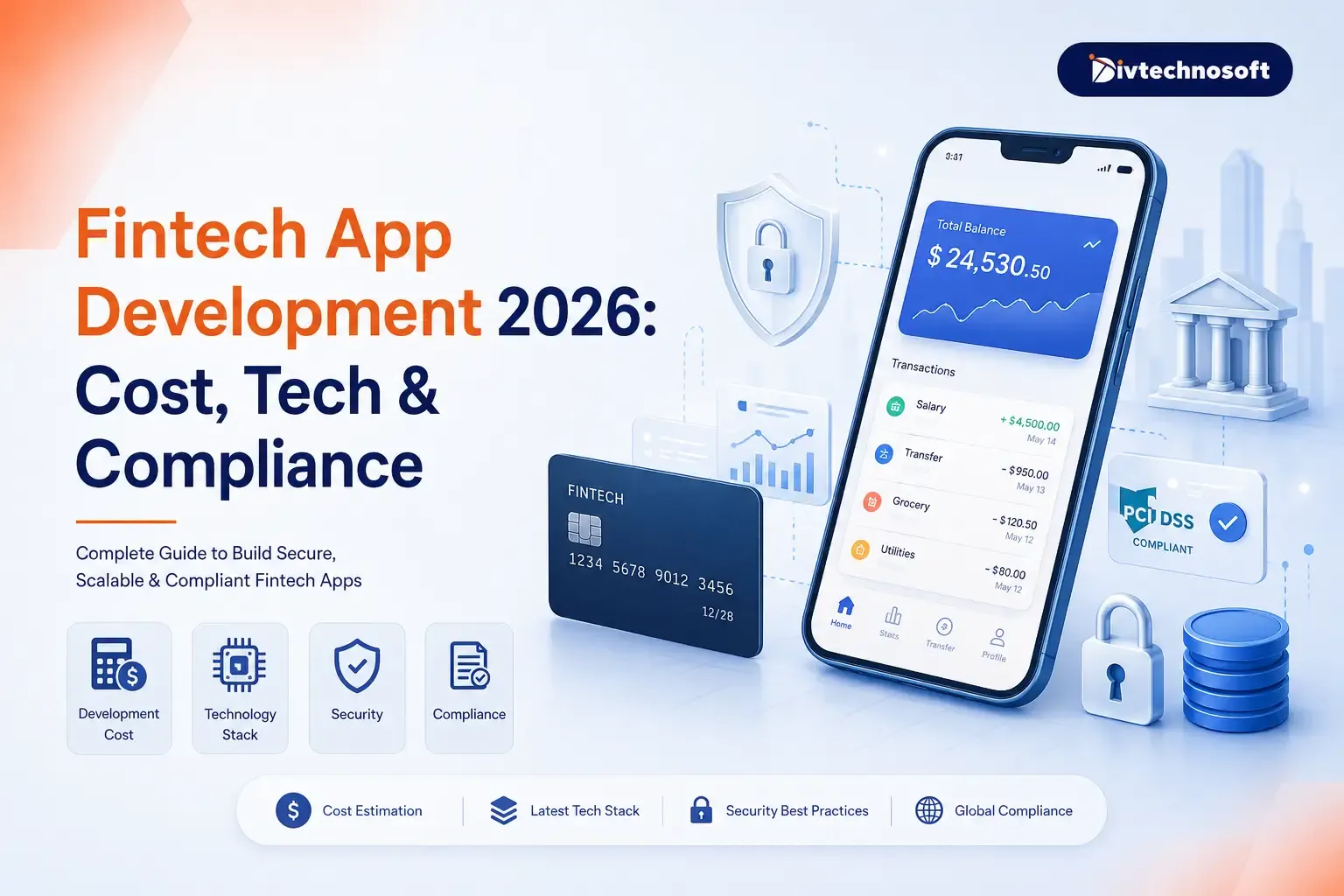
The financial technology landscape in 2026 demands fast processing, top security, AI tools, and strict regulation adherence. For founders, choosing the right approach for fintech app development makes or breaks user trust and investor support.
To launch successfully, you need a smart plan. Working with a skilled fintech software development company helps you handle fintech app compliance, pick a modern fintech tech stack, and control your total fintech app development cost.
This guide covers everything you need to know: key regulations, technical choices, budget tiers, and quick launch methods to build a secure product.
Fintech Compliance Requirements
Here's what to get right before you launch in 2026:
Data privacy first: Standards like GDPR, CCPA, and SOC 2 Type II all expect the same baseline: financial data encrypted in transit with TLS 1.3, and encrypted at rest with AES-256.
Automate KYC and AML checks: Manual identity verification doesn't scale, and it's easy to get wrong. Plugging in a verification API like Persona or Plaid screens users against global watchlists automatically, flagging bad actors before they're onboarded.
Lock down payment security: PCI-DSS compliance is non-negotiable if you're touching card or transaction data. Pairing it with biometric MFA (Face ID, fingerprint) adds a second line of defense that users barely notice but attackers can't easily get past.
Isolate data at the database level: Row-Level Security ensures each user's records are walled off from everyone else's, so even a coding mistake elsewhere in the app can't accidentally expose one user's data to another.
Building a Scalable Fintech Tech Stack
Choosing the right fintech tech stack determines how fast your app processes data, scales during traffic spikes, and keeps user data secure.
Here are the primary tech choices powering fintech platforms in 2026:
Area | Recommended Tech Stack |
|---|---|
Frontend | Next.js + TypeScript; React Native + Expo for mobile |
Backend & Database | Node.js + PostgreSQL/Supabase; Vercel or AWS + Docker |
Fintech APIs | Stripe for payments; Plaid for banking and account data |
AI & Security | Pinecone/pgvector for AI features; encryption for data protection |
Accelerating Time-to-Market with a Fintech MVP
Launching a complete financial product takes time and significant capital. Building a targeted Minimum Viable Product (MVP) lets you test your main idea in the real world with minimal risk.
Accelerate Launch with MVP Development
Working with dedicatedMVP Development Services helps startups validate core features, gather user feedback, and prepare investor pitches in 4 to 7 weeks. Focusing on essential workflows saves capital, accelerates market entry, and ensures zero technical debt for future growth.
A structured MVP delivery approach follows four key phases:
Discovery & Scope Definition (Week 1): Mapping user journeys and defining the leanest feature matrix to test your main value hypothesis.
UI/UX Prototyping (Weeks 1.5 to 3): Designing interactive Figma prototypes and click-to-demo flows for early stakeholder testing.
Core Engineering (Weeks 3 to 5.5): Building secure user authentication, database schemas, primary payment flows, and core APIs.
Analytics & Launch Prep (Weeks 5.5 to 6.5): Embedding event telemetry, cohort retention tracking, and end-to-end quality assurance before live release.
See this lean validation strategy in action in ourPersonal Finance Tracker App Case Study. Divtechnosoft built a secure finance application with real-time data sync, custom reporting, and automated budgeting, helping the team launch quickly and scale efficiently.
Understanding Fintech App Development Cost
Calculating your total fintech app development cost depends heavily on product complexity, target platforms, regulatory compliance needs, and AI features. Choosing a transparent pricing model ensures you avoid surprise bills and retain full code ownership.
1. Validation MVP ($15K to $22K)
Designed for pre-seed startups looking to validate a single core idea in 3 to 4 weeks. This package includes user authentication, a single core transaction workflow, a responsive web interface, and basic analytics setup.
2. Investor-Ready Fintech Product ($25K to $35K)
Targeted at startups building to secure Series A funding or launch pilot programs in 5 to 7 weeks. It features custom mobile or web apps, multiple user roles, an admin dashboard, payment gateway integration, day-one analytics, and full intellectual property handoff.
3. AI-Enhanced Fintech Platform ($38K to $50K)
Built for AI-first products in 7 to 8 weeks. This package includes natural language expense tracking, vector database setup, automated compliance workflows, predictive financial models, and custom AI prompt engineering.
Key Variables Driving Fintech App Development Costs
Outside of initial engineering, three operational factors impact your total software budget:
Third-Party API Licensing: Connecting to financial data providers like Plaid, Stripe, or identity verification (KYC) platforms incurs ongoing transactional or monthly API usage fees.
Security Auditing & Penetration Testing: External security reviews and SOC 2 audits add upfront costs but are essential for institutional partnerships and user trust.
Post-Launch Support & Optimization: Dedicated maintenance packages ensure consistent server uptime, security patches, and database tuning after your app goes live.
Choosing the Right Fintech Software Development Company
Building a secure, scalable app requires an experienced engineering partner. Choosing the right fintech software development company ensures your product passes investor due diligence and scales smoothly.
Look for a clean, modular TypeScript codebase that's well documented, so future developers or a CTO can extend the app later without costly rewrites. Full ownership of your code and IP matters too, since complete transfer of source code and database configurations keeps you free from platform lock-in or recurring fees.
The team should also bring proven mobile-first UX and real-time sync expertise, building cross-platform apps on resilient databases that deliver fast, reliable transaction updates. Finally, look for a partner that aligns its milestones with your fundraising goals, building demo flows and user analytics tracking that help you show investors real traction.
FAQs
How long does it take to launch a fintech MVP?
A focused fintech MVP typically takes 4 to 7 weeks to design, engineer, and launch. This allows startups to test core features, ensure baseline security, and gather user feedback quickly.
Do I own the source code and IP after development?
Yes. Reputable engineering partners provide 100% full source code and intellectual property transfer upon launch, ensuring no proprietary framework lock-in or recurring platform licensing fees.
How do fintech apps ensure security and regulatory compliance?
Fintech platforms enforce data encryption (TLS 1.3 in transit, AES-256 at rest), biometric multi-factor authentication, database-level Row-Level Security (RLS), and automated identity checks via KYC/AML APIs.
Wrapping Up
Launching a successful financial product in 2026 requires balancing strict regulatory compliance, modern tech stack choices, and disciplined budget optimization. By starting with a focused Minimum Viable Product, founders can validate core hypotheses, protect user data, and secure early market traction without burning through capital.
Ready to build a secure, high-performance financial app? Partner with Divtechnosoft to plan your investor-ready fintech product roadmap, choose the right technology stack, and accelerate your time-to-market.