MVP Is Live, What Next? Post-Launch Steps to Scale
Your MVP is live. Here's what comes next: post-launch mistakes to avoid, a step-by-step post-MVP strategy, and how to scale your team and product.

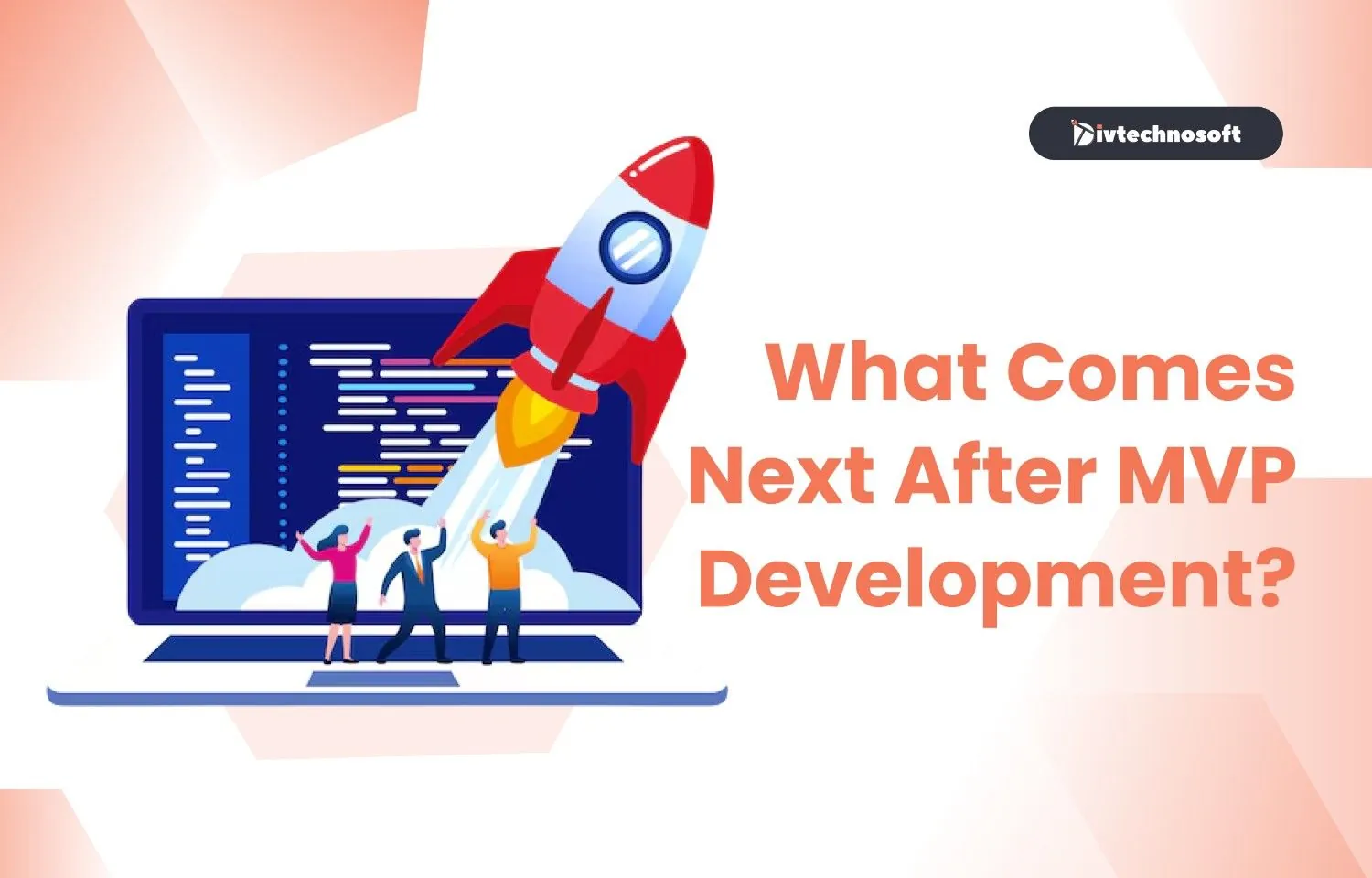
You have successfully launched your Minimum Viable Product (MVP). You’ve navigated the initial development cycle, survived the launch day jitters, and your product is finally in the hands of real users.
But here is the reality check: The MVP is just the beginning, not the destination.
The true challenge lies in what you do with the data you’ve gathered.
Common Mistakes Startups Make After MVP
After launching an MVP, startups often hit a critical stage. Many struggle here because they haven’t planned how to improve or expand the product beyond the initial release. The period immediately following an MVP launch is often referred to as the chasm. Many startups fail here because they lack a coherent MVP follow-up strategy.
The most frequent error is the "Now What?" Syndrome. Founders often exhaust their energy (and budget) getting to the MVP and fail to plan for the iteration phase.
Over-reacting to outliers: Changing your entire product roadmap because one loud user requested a niche feature.
The "Launch and Leave" approach: Assuming the product will market itself once it’s live.
Ignoring Technical Debt: An MVP is often held together by "duct tape" code. Scaling on this foundation without cleanup is a recipe for a crash.
Building an MVP vs. Building a Sustainable Product
The difference is fundamental. An MVP is built to learn; a sustainable product is built to earn and endure. To understand how to set the right foundation from the start, it is helpful to refer back to a complete guide to MVP development, which ensures you haven't missed critical early-stage steps. While the MVP focuses on the Minimum, the sustainable product focuses on Reliability, Usability, and Scalability.
The Cost of Stagnation Post-MVP
In 2026, user patience is at an all-time low. If your MVP launch isn't followed by visible improvements, bug fixes, and feature updates within the first 30 to 60 days, you lose the Early Adopter momentum. Stagnation is a signal to the market that your startup is either out of funds or out of ideas.
Steps for Post-MVP Product Strategy
Scaling requires a structured approach. Here is your MVP product roadmap for the growth phase.
Step 1: Analyze Your MVP Results
Data is the only compass you have. You must move beyond vanity metrics (like total sign-ups) and look at Actionable Metrics.
Retention Rate: Are users coming back after day one? High churn at this stage usually indicates that the core value proposition isn't hitting the mark.
Drop-off Points: Where in the funnel are users getting frustrated? Use heatmaps and session recordings to see where users abandon the journey.
Feature Usage: Which 20% of your features are driving 80% of the value? Often, a secondary feature becomes the primary reason people use the app.
NPS (Net Promoter Score): Would your users actually recommend this to a peer? This measures organic growth potential.
Step 2: Validate (or Invalidate) Core Assumptions
Every MVP is built on assumptions: Users will pay $X for this, or Users need this specific integration. After MVP development, you must sit down and compare your initial hypothesis with reality.
If your core assumption was that speed is the main pain point, but users are actually complaining about complexity, you need to be prepared to pivot. Invalidation is not a failure; it’s a cost-saving discovery that prevents you from building a product nobody wants. Use this phase to document Lessons Learned and adjust your user personas accordingly.
Step 3: Prioritize What to Build Next
Your backlog is likely overflowing with ideas. To scale effectively, you need a prioritization framework like RICE (Reach, Impact, Confidence, Effort).
Fixes First: Critical bugs that impede the core value must be addressed immediately. Stability is a feature.
High-Impact Features: Focus on features that directly contribute to user retention or conversion.
Say No to "Nice-to-Haves": In the post-MVP phase, focus on being the best at your core function rather than being average at ten different things.
Step 4: Build for Scale, Not Just Speed
If your MVP was built with a simple or rushed tech setup, it’s time to rebuild it properly. This is the Product Hardening phase.
Infrastructure: Move toward cloud-native, auto-scaling environments like AWS, Azure, or GCP. Your system must be able to handle the Oprah effect, a sudden surge in traffic.
Security & Compliance: Ensure your product meets the 2026 standards for data privacy (GDPR, SOC2, CCPA). Trust is the hardest thing to build and the easiest to lose.
Performance: Optimize database queries and API response times. A product that works for 100 users might crawl when 10,000 sign up simultaneously. Implement caching strategies and CDN usage to lower latency.
Step 5: Define the Path to Product-Market Fit (PMF)
Product-Market Fit is that magical moment when your customers become your sales team. To get there, you must iterate.
Continuous Feedback Loop: Keep talking to users even after the MVP stage. Set up automated triggers to ask for feedback after specific milestones.
Monetization Strategy: If your MVP was free, the next step is validating whether users will actually pull out their credit cards. Test different pricing tiers and freemium models.
Marketing & Growth: Once the product is stable, shift focus toward post-MVP growth tactics, SEO, content marketing, and paid acquisition to fuel the fire.
Diving Deeper into Post-MVP Growth Tactics
Tactical Lever 1: The "Viral Loop" Integration
Organic growth is driven by built-in virality. Can your product get better as more people use it? (e.g., Slack, Figma). Look at your roadmap and identify where collaborative value can be added. If a user invites a colleague, does the product become 10x more useful for them? If yes, you have a growth engine.
Tactical Lever 2: Technical Debt Management
Scaling isn't just about adding new features; it's about removing friction. Technical debt is the interest you pay on fast coding decisions made during the MVP.
Refactoring: Allocating 20% of every sprint to cleaning up old code.
Documentation: As you scale from 2 developers to 20, documentation becomes the source of truth that prevents bottlenecks.
Automated Testing: Transition from manual QA to CI/CD pipelines. This ensures that every new feature added doesn't break the three features that were already working.
Tactical Lever 3: Customer Success vs. Customer Support
Post-MVP, you need to move from fixing problems (Support) to ensuring outcomes (Success).
Onboarding: Most churn happens in the first 5 minutes. Is your onboarding high-touch or self-serve?
Education: Use webinars, knowledge bases, and in-app tooltips to turn trial users into power users.
Transitioning the Team: From Explorers to Builders
The team that builds an MVP is often different from the team that scales a product. The explorer mindset thrives on chaos and 0-to-1 growth. The builder mindset thrives on systems, KPIs, and 1-to-100 growth.
Hiring: Start looking for specialists (DevOps engineers, Data Scientists, Product Managers) rather than generalists.
Culture: Shift from moving fast and breaking things to moving fast with stable infrastructure.
How Divtechnosoft Can Help
Transitioning from an MVP to a full-scale digital product is a journey fraught with technical and strategic hurdles. You don't have to navigate it alone.
At Divtechnosoft, we specialize in taking startups beyond the initial launch through our specialized MVP development services. We don't just build code; we build sustainable businesses. Our team of experts helps you analyze user data, refactor your architecture for high-traffic demands, and implement a feature-rich roadmap that aligns with your business goals.
We understand that what comes next after MVP development is a critical pivot point. Whether you need to scale your infrastructure, enhance your UI/UX based on user feedback, or integrate complex third-party systems, we provide the technical muscle and strategic vision to turn your MVP into a market leader.
Our approach is data-driven and results-oriented. We help you identify the signal within the noise of user feedback, ensuring that every dollar spent on post-MVP development contributes directly to your bottom line and user satisfaction.