How to Implement Marketing Automation After MVP is Released?
Learn how to implement marketing automation after your MVP is released. Discover essential tools, workflows, & strategies to streamline user onboarding.

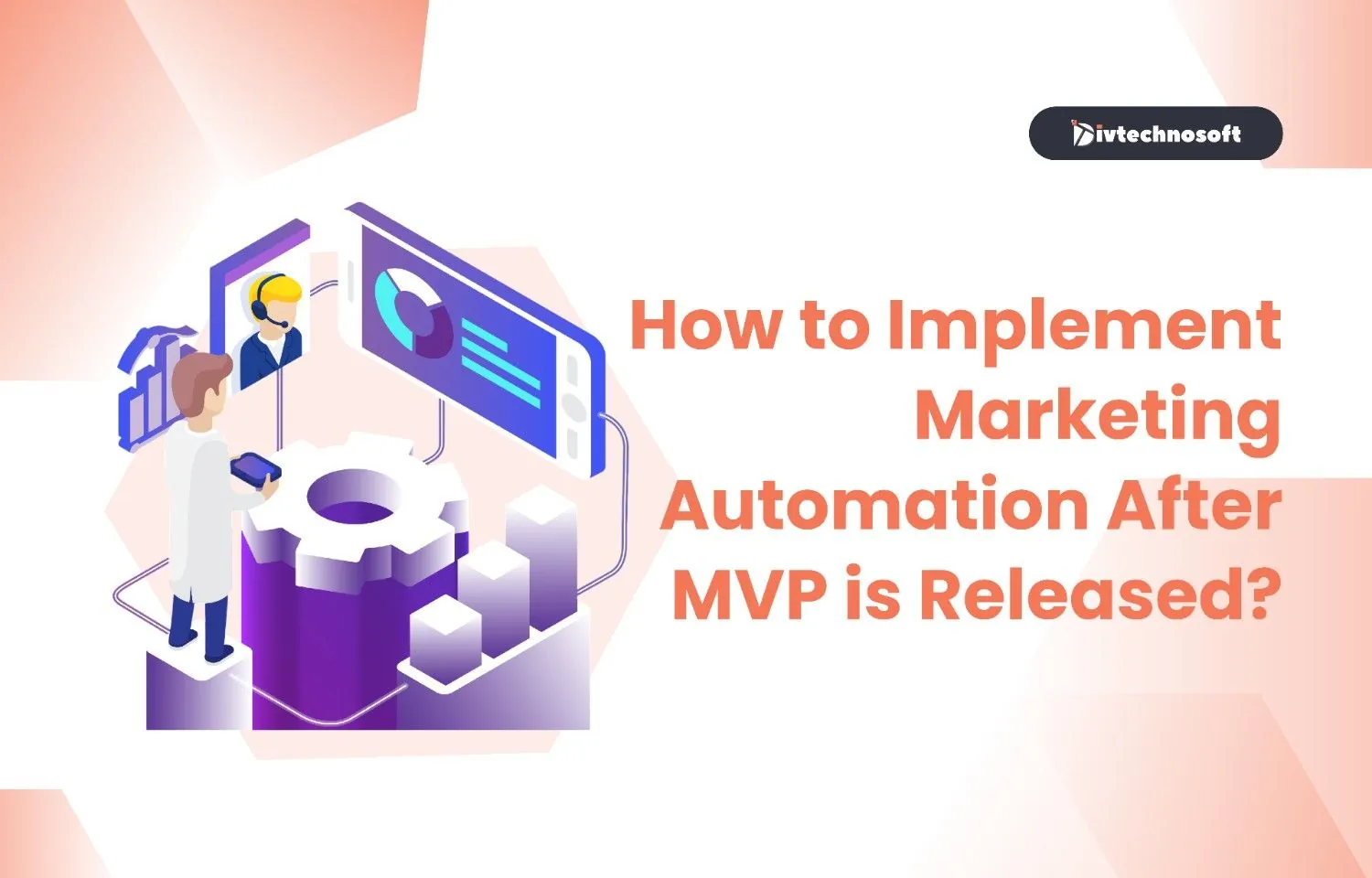
Launching a Minimum Viable Product (MVP) is a monumental milestone, but in the fast-paced digital ecosystem of 2026, it is only the beginning of your journey. Once you have validated your core product idea with a group of early adopters, the challenge shifts from "Will they use it?" to "How do we scale this efficiently?"
Startups often operate with lean teams where every hour counts. Relying on manual outreach, repetitive email follow-ups, and individual lead qualification is a recipe for burnout and missed opportunities. This is where marketing automation becomes your most valuable silent partner. By automating the mechanical aspects of your growth engine, you can ensure that every user journey is nurtured with precision while your team focuses on high-level strategy and product iteration.
This guide provides a comprehensive roadmap for implementing marketing automation after your MVP release, covering why it is essential, the step-by-step implementation process, and the advanced strategies used by top-performing startups to turn early momentum into sustainable growth.
Why Marketing Automation is Important After MVP Launch
The transition from MVP to a full-scale product requires a shift in mindset. You are no longer just gathering feedback; you are building a revenue-generating machine.
Limited Startup Resources
In the early post-launch phase, budgets are tight. You likely don’t have the capital to hire a 10-person marketing department. Automation acts as a force multiplier, allowing a single marketer to manage the output of an entire team. It handles the grunt work, segmentation, scheduling, and basic communication at a fraction of the cost of a full-time hire.
Need for Consistent User Engagement
If users sign up and don’t hear from you for a few days, they will likely lose interest and drop off. Automation solves this by keeping communication consistent. No matter when someone signs up, 2:00 AM or 2:00 PM, they receive the same high-quality welcome message, onboarding guidance, and value reminders that keep them engaged. To take this a step further, many startups are looking toward the future of AI agents and chatbots to provide real-time, automated assistance that mirrors human interaction, ensuring that user queries are resolved the moment they arise.
Scaling Without Hiring Large Teams
Scaling isn't just about getting more users; it's about handling them efficiently. Marketing automation platforms can manage 100 users just as easily as 100,000. This "set it and forget it" infrastructure allows you to maintain a lean headcount while your user base grows exponentially.
Converting Early Adopters into Customers
Early adopters are often forgiving, but they need a clear path to becoming paying customers. Automation allows you to implement "lead scoring" and behavioral triggers that identify when an early adopter is ready to upgrade, ensuring you strike while the iron is hot.
Steps to Implement Marketing Automation After MVP Release
Step 1: Define Your Growth Goals
Before touching any software, you must know what success looks like. Are you trying to reduce churn? Increase the conversion rate from free trial to paid? Or perhaps drive referrals? Use the SMART framework (Specific, Measurable, Achievable, Relevant, Time-bound) to set your North Star. For example: "Increase trial-to-paid conversion by 15% within the next 90 days."
Step 2: Identify Your Target Audience Segments
Not all users are created equal. Post-MVP, you’ll start seeing different types of users. Segment them based on:
Demographics: Industry, job role, or location.
Behavior: Power users vs. those who haven't logged in for a week.
Source: Did they come from a LinkedIn ad or a cold search?
Effective segmentation ensures that your automated messages feel personal rather than like generic spam.
Step 3: Set Up Customer Journey Automation
Map out the path you want a user to take from the moment they land on your site to the moment they become a brand advocate.
Automation should nudge them through these stages. If they get stuck at the onboarding stage, a trigger should automatically send a helpful "How-to" guide or a link to a demo.
Step 4: Choose the Right Marketing Automation Tools
The market is flooded with tools, but for a startup, you need a balance of power and simplicity. Look for tools that offer:
Seamless CRM integration.
Intuitive drag-and-drop workflow builders.
Robust analytics to track ROI.
(See the tools table below for specific recommendations.
Step 5: Automate Lead Nurturing Campaigns
Most users won’t buy on day one. A lead nurturing campaign is a series of automated emails or messages that "warm up" the lead over time. Share case studies, blog posts, and industry insights to establish authority and keep your brand top-of-mind.
Step 6: Implement Behavioral Tracking
Advanced automation relies on data. By tracking what users do within your app, which buttons they click, and which pages they visit, you can trigger hyper-relevant messages. If a user visits your pricing page three times in one hour, your system should automatically send them a personalized "Need help choosing a plan?" email.
Step 7: Personalize Marketing Campaigns
In 2026, personalization goes beyond just using a First Name tag. Use the data you've gathered to tailor content. Mention the specific industry they are in or the specific feature they've been using most. Personalized emails have significantly higher open and click-through rates than generic blasts.
Step 8: Analyze and Optimize Campaign Performance
Automation is not "set it and forget it" in the sense that you never look at it again. Regularly review your analytics. Which emails have the lowest open rates? Where are users dropping off in your funnel? Use A/B testing to refine subject lines, CTAs, and timing to constantly improve your results. For instance, analyzing how AI can assist in the early stages of the funnel is a great way to optimize your lead qualification process.
Best Marketing Automation Strategies for Startups
Product-Led Growth (PLG) Automation
If your product is self-serve, use automation to drive users toward the "Aha!" moment. For example, if a user hasn't completed a key action (like setting up their profile), send an automated "In-App" message or a push notification with a 1-minute video tutorial.
Referral Marketing Automation
Word-of-mouth is the cheapest form of growth. Automate the process by asking happy users (those with high NPS scores) to refer a friend in exchange for a discount or an extra feature. The system can handle the link generation, tracking, and reward distribution automatically.
Content Marketing Automation
Content Marketing Automation Don’t let your blog posts sit idle. Use automation and Generative AI to drip your best evergreen content to new subscribers over several weeks. This builds trust and ensures that every new lead sees your most valuable work.
Retargeting Campaigns
If a user visits your site but doesn't sign up, use automated retargeting ads (on Google or Meta) to bring them back. You can even automate the specific ad they see based on the content they viewed on your site.
Detailed Implementation Roadmap: From MVP to Scale
To reach a sustainable growth phase, your automation strategy needs to move in phases.
Phase 1: The Foundation (Days 1 to 30)
Focus on capturing leads and ensuring they don't immediately churn.
Lead Capture: Install optimized web forms and connect them to your CRM.
Welcome Sequence: A 3-part email series welcoming users, setting expectations, and offering immediate value.
Data Hygiene: Set up rules to filter out spam signups and categorize leads by source.
Phase 2: Engagement and Nurturing (Days 31 to 60)
Move from basic communication to behavioral response.
Drip Campaigns: Establish a weekly or bi-weekly "Value Drip" that shares educational content.
Churn Triggers: Set up an automation that triggers if a user hasn't logged in for 7 days.
Lead Scoring: Assign points for high-value actions (e.g., inviting a teammate = 10 points; viewing the pricing page = 5 points).
Phase 3: Conversion and Expansion (Days 61+)
Focus on revenue and advocate building.
Sales Handoff: Automatically notify your sales team (or trigger a specific offer) when a lead reaches a "Hot" score.
Upsell Sequences: For current customers, automate messages suggesting premium features based on their usage patterns.
Feedback Loops: Automate Net Promoter Score (NPS) surveys 30 days after a user joins.
Marketing Automation Workflow Example for Startups
Stage | Action | Trigger |
|---|---|---|
Discovery | User signs up for the MVP. | Immediate. |
Welcome | Send "Welcome & Getting Started" email. | 2 Days After Signup. |
Education | Send "Top 3 Features to Try" guide. | Send "We Miss You" re-engagement email. |
Engagement | User hasn't logged in for 4 days. | Trigger "Upgrade to Pro" special offer. |
Conversion | User hits a specific usage milestone. | Send "Usage Report" and request for feedback. |
Retention | User completes first month. | Becomes harder to manage as lead volume grows |
Overcoming Common Automation Challenges
Even with the best tools, startups often stumble. Here is how to avoid the most common pitfalls:
Over-Automation: Don't automate every single interaction. Sometimes a personal note from the founder is more effective than five automated emails.
Broken Workflows: Test your triggers regularly. There is nothing worse for a brand than a user receiving a Welcome email three weeks after they joined.
Irrelevant Content: If you don't segment your list, you risk sending Developer Tips to your Marketing Leads. Use strict tagging rules to keep content relevant.
Tools Startups Use for Marketing Automation
Category | Recommended Tools (2026) | Best For |
|---|---|---|
Email & Drip Campaigns | MailerLite, Brevo, ActiveCampaign | Startups looking for simplicity and affordability |
CRM & All-in-One | HubSpot, Zoho CRM, Salesforce | Scaling teams needing a unified view of sales/marketing |
Advanced Journeys | Customer.io, Intercom | SaaS startups focusing on in-app behavior triggers |
Social Media | Buffer, Hootsuite, Social Champ | Managing multiple channels and post-scheduling |
Connectivity | Zapier, Make (formerly Integromat) | Connecting different tools that don’t have native integrations |
Start Scaling Now
Marketing automation becomes essential once your MVP is validated. It helps startups scale efficiently by delivering consistent communication, reducing manual work, and improving user engagement. Start with simple workflows, refine them based on data, and gradually build more advanced automation as your product grows.